Sponsored by: The tech giants have had another important earnings season, which has brought investors a number of interesting surprises. Microsoft, Alphabet, Amazon, Meta and Netflix have all published their financial results, with most of them showing that the tech sector is still in very good shape. But while sales and profits are often growing at a double-digit rate, some companies' shares have plummeted after the results were published. The reason? Investors are no longer satisfied with just good numbers and are increasingly interested in whether the tech giants' huge investments in artificial intelligence will actually pay off.
Netflix is growing slower than investors would like
One company that didn't impress investors with its results was Netflix. Although the streaming giant increased its revenue by 12% year-on-year to $12,9 billion and significantly improved its profit, its shares fell by about 5% after the results were released. The decline is mainly due to slower growth and a less optimistic outlook for the coming months.
Netflix has cut its expected advertising revenue this year from about $3 billion to $2,7 billion, with overall revenue growing at its slowest pace in three years. The company is also undergoing a reorganization that includes changes to its content division's leadership and layoffs of about 6% of its staff.
The question remains how Netflix plans to continue growing in the coming years. In addition to competing streaming services, it must also compete for viewers' attention with YouTube and, in the future, potentially with videos created by artificial intelligence.
Meta has shown the power of advertising, but investment in AI is growing
On the other hand, Meta boasted very good results, with revenue growing by 26% year-on-year to $64,6 billion. The company thus surpassed analysts' expectations and its own forecasts. The main credit for this is its advertising business, which is increasingly helped by artificial intelligence. Thanks to it, Meta is able to recommend content better, keep users in its applications longer, and at the same time target advertising more effectively.
A closer look at the results, however, reveals the huge investments. Meta's capital expenditures reached $34,9 billion, exceeding operating cash flow for the first time ever. Free cash flow thus turned negative at $2,1 billion.
The company's net income was also impacted by a one-time charge of $9,9 billion related to a settlement with U.S. attorneys general. So while Meta is proving that artificial intelligence can significantly help its business, it is also clear that further growth requires extremely high investments.
Google Cloud shot up, Alphabet still lost
Perhaps the most interesting reaction from investors came from Alphabet's results. Google's parent company announced a 25% year-on-year increase in total revenue to $127,6 billion, with its cloudGoogle's new division Cloud It literally shined. Its sales grew 103% to $30,7 billion and its operating margin increased from 23,7% to 36,2%.
Internet search also performed well, with revenue up 12%. However, it is in this area that investors are increasingly addressing the potential impact of artificial intelligence, which is gradually changing the way people search for information on the Internet, which could affect one of Google's most important sources of revenue in the future.
Source: xStation
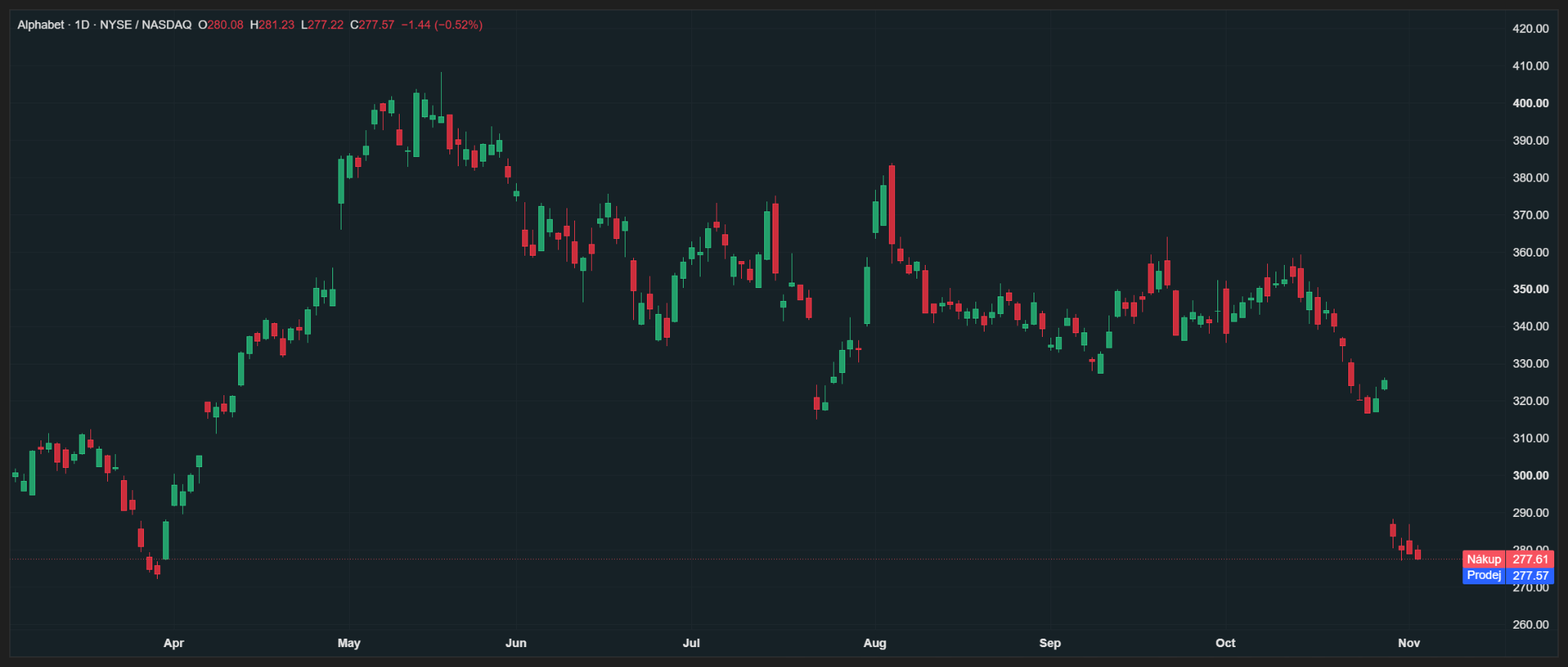
Despite very strong sales, Alphabet shares fell sharply after the results were released. They initially lost more than 8% and eventually ended the trading day with a drop of more than 12%. Investors were not pleased with the 25% drop in net income to $26,2 billion, which was mainly due to an accounting loss of $8,7 billion caused by the revaluation of investments in other companies.
Alphabet thus clearly demonstrated that even extremely rapid growth cloudmay not be enough for investors to accept the results positively.
Microsoft continues to grow, Azure drives AI boom
A slightly calmer market reaction was caused by Microsoft, which in the first quarter of the fiscal year 2027 reported sales of $92,3 billion. This represents a year-on-year growth of 19%. It performed particularly well cloudAzure platform, whose growth rate accelerated from 42% to 48%.
And according to Microsoft management, it should be even better. The company expects Azure to grow by 49 to 50% in the next quarter, which suggests that interest in cloudThe demand for e-services and infrastructure for artificial intelligence is definitely not weakening yet.
However, Microsoft also has to invest huge amounts in expanding its capabilities. In the last quarter alone, capital expenditures reached $39,4 billion. However, investors received the results relatively well and the company's shares strengthened slightly.
Amazon earns record amounts, but the market expected more
Another tech giant whose results drew mixed reactions is Amazon. The company achieved an all-time high operating margin of 13,9% and its operating profit jumped 61% year-over-year to $28,1 billion. However, shares fell about 7% after the results were announced.
The main driver remains cloudAWS, which increased revenue by 39% to $46 billion, its fastest growth in nearly five years. In addition, the value of contracted orders reached $578 billion, and Amazon expects its cloudThe e-commerce business will grow at a rate exceeding 40% also in the years 2027 a 2028.
The problem, however, was slightly weaker growth in total sales, which increased by 12% year-on-year, slightly falling short of analysts' expectations. Investors were also disappointed by the advertising segment, whose growth was weaker than expected. And this ultimately outweighed the company's record profitability.
The AI boom is not over, but investors are becoming more demanding
The results of the largest technology companies show that artificial intelligence remains one of the main drivers of their growth. Demand for cloudThe number of services is growing, advertising systems are becoming more efficient thanks to AI, and technology giants are investing tens of billions of dollars every quarter in further expanding their infrastructure.
At the same time, it is becoming clear that investors are no longer just looking at current sales and profits. They are increasingly interested in the future development and return on investment that technology companies are making in AI. If the market expects exceptionally strong results, even exceeding them may not automatically mean a rise in shares.
The question of when and to what extent massive investments in artificial intelligence will turn into real profits and free cash flow will be crucial for the technology sector in the coming quarters. In any case, the results so far confirm that the AI boom continues, but investor demands are ever higher.
Want to learn more about the performance of tech giants and current events in the financial markets? Then don't miss the latest Market Talk from XTB, in which Tomáš Vranka, Filip Galko and Marek Nemky analyze the financial results of the largest technology companies and other events that may affect the development of stock markets.

Investing is risky. Invest responsibly.