Sponsored by: Bitcoin has had an exceptionally strong period. In just a few days, its price has risen by around 22%, reaching above $77,000. Several factors have contributed to this movement: uncertainty in the US bond market, significant buying via ETFs, and a more optimistic outlook for cryptocurrency regulation in the United States.
Bond yields, national debt and Treasury actions
A significant factor was the decision of the American miniTreasury. After the yield on the 30-year Treasury note exceeded 5%, the Treasury announced an increase in some purchases of long-term bonds from $2 billion to $4 billion. The measure is intended to improve market liquidity and relieve pressure on the long end of the yield curve.
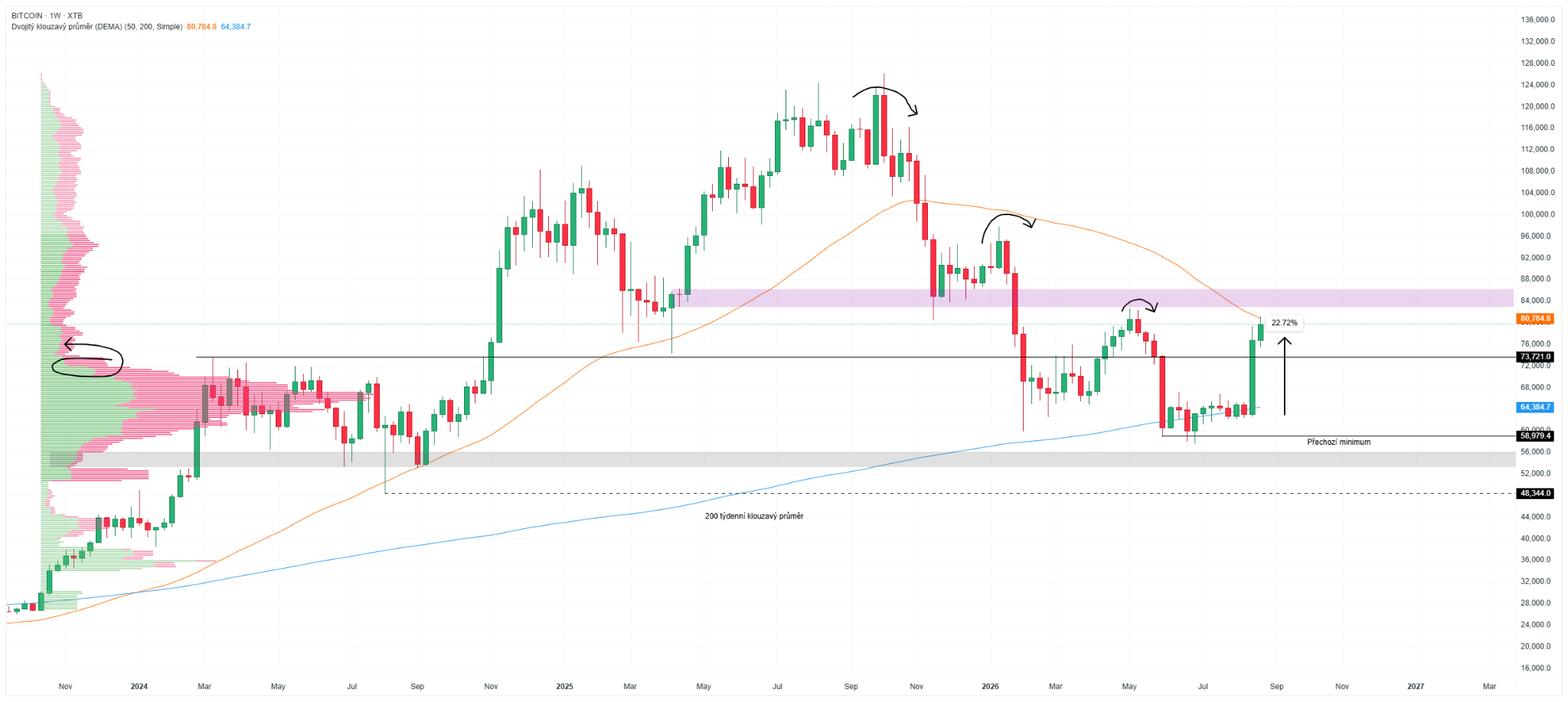
Source: XTB xStation
The development is all the more noteworthy because the total US debt has risen above 100 billion for the first time. 40 trillion USDIts operation is increasingly burdening the federal budget, and high long-term yields are complicating the situation.
Markets may view such developments as a signal to shift some capital. Falling long-term yields, coupled with a weaker dollar, could increase the attractiveness of alternative assets such as gold and Bitcoin.
Growth was supported by shorts and purchases on the spot market
The dynamics of the movement were significantly increased by the liquidation of short positions worth $2,7 billion. Traders who speculated on a decline had to close their positions as Bitcoin rose sharply. This created a typical short squeeze: the price rises → shorts are liquidated → more purchases come → the rate rises even more.
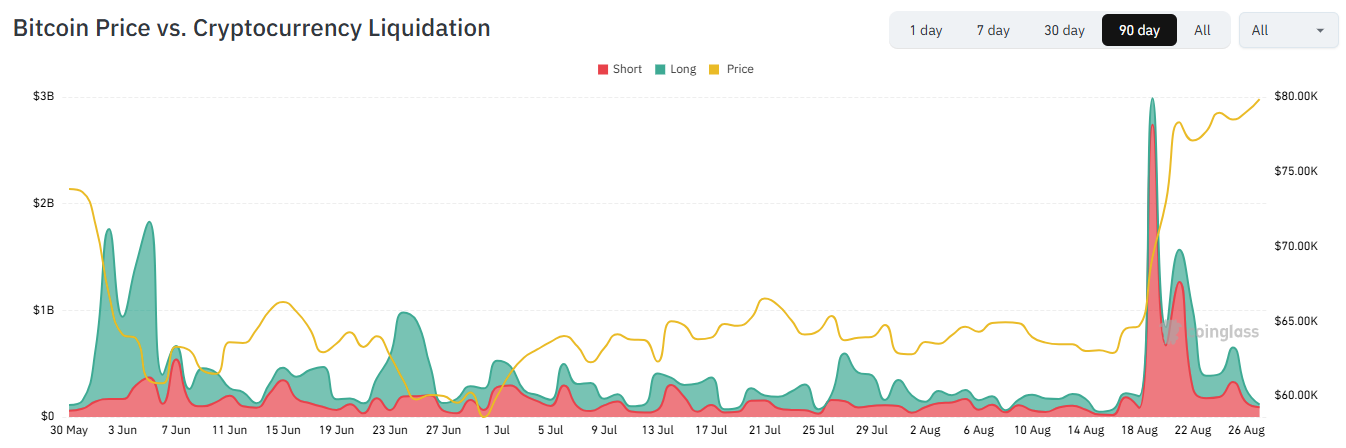
Source: coinglass
But it wasn't just the leverage effect. The US spot ETF focused on Bitcoin attracted almost $1,9 billionIt was the best weekly result since October. 2025.
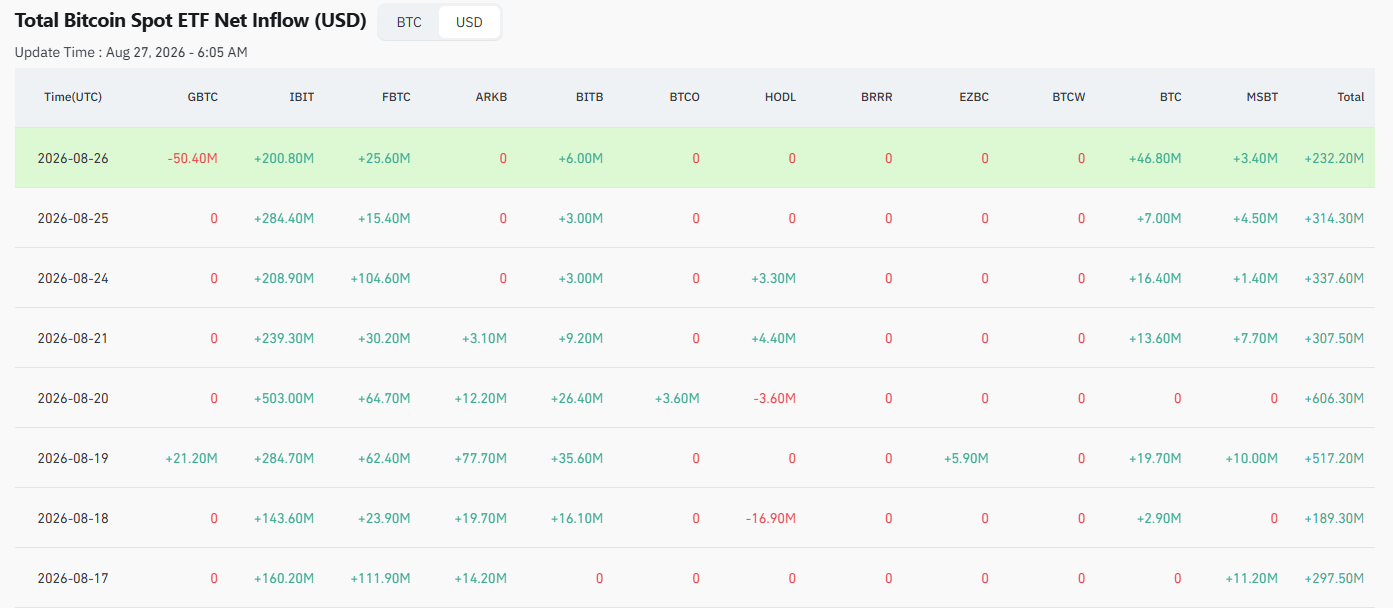
Source: coinglass
Bitcoin rally then nestIt was supported significantly by real spot demand.
The CLARITY Act, Trump and the Hyperliquid platform
The positive mood in the market is also being boosted by developments in US cryptocurrency legislation. Donald Trump has called for a "fair" version CLARITY Act, which should more clearly divide regulatory powers between the SEC and the CFTC. The next important procedural step in the Senate is scheduled for September 15.
Attention is also drawn to Hyperliquid. According to Trump, the CFTC is looking for a way to bring the platform to the US market in a fully regulated form. Hyperliquid subsequently asked the SEC and CFTC to create common rules for perpetual contracts. If such a system were to be created, it could pave the way for some cryptocurrency trading to move from offshore platforms back to the US.
Ethereum responds to more favorable regulations
Regulatory changes are also having a positive impact on Ethereum. The SEC and CFTC already listed ETH as a "digital commodities", i.e. digital assets that are not considered securities in themselves.
On August 18, the SEC published a proposal Regulation Crypto Assets. It is intended to bring more specific rules for raising capital in the cryptocurrency sector and also includes a safe harbor mechanism for certain digital assets. The document is currently open for public comment.
A more favorable regulatory environment, inflows into ETFs, and greater investor willingness to take risk have helped Ethereum outperform Bitcoin during the current rally.
Chart: Ethereum vs. Bitcoin
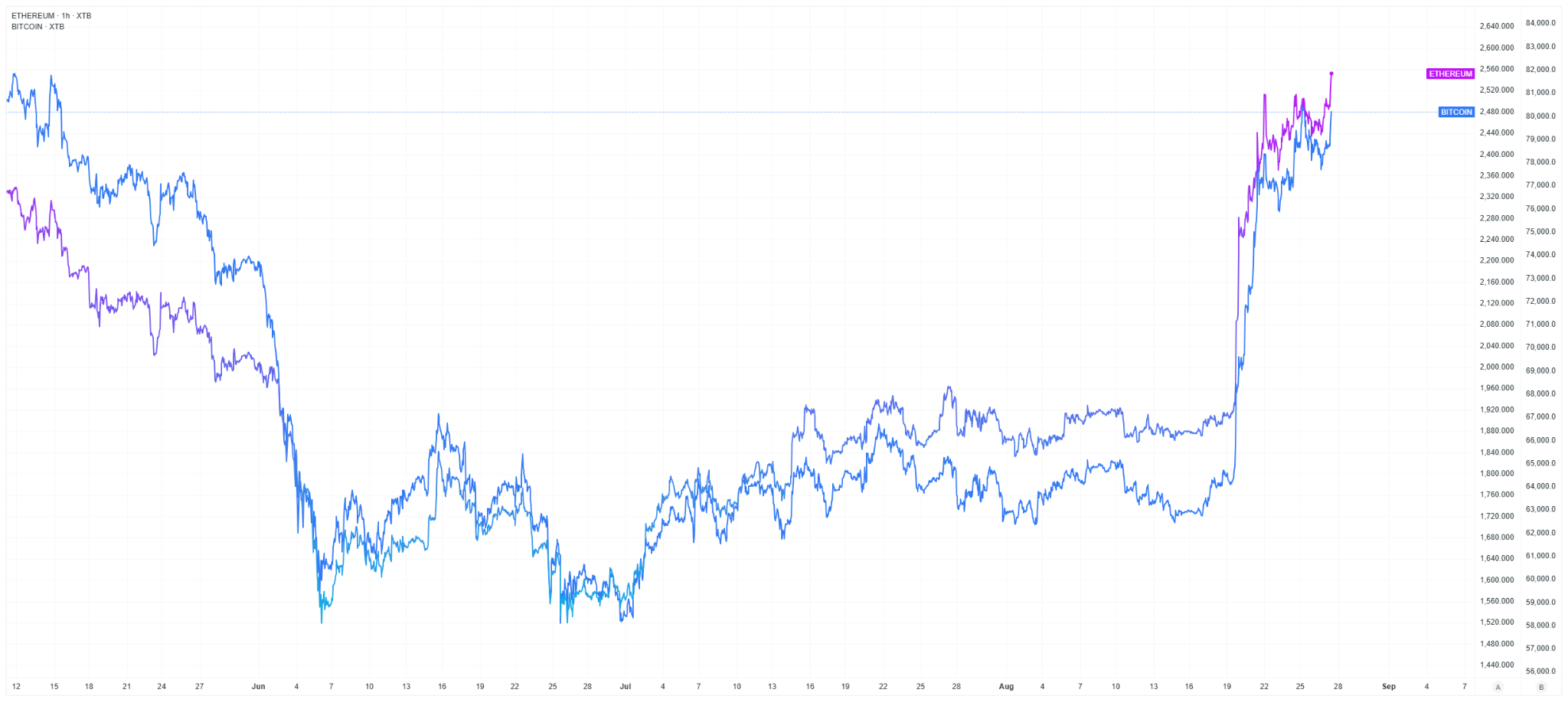
Source: XTB xStation
Zcash: rapid growth with significant leverage
Zcash has seen even more dramatic price action. ZEC surged above $800 during August and briefly reached nearly $850, levels last seen in 2018.
An important catalyst was Grayscale, which transformed its Zcash Trust into spot ETF ZCSHThis product began trading on NYSE Arca on August 25th and represents the first spot product of its kind for ZEC.
Zcash has also seen a significant recovery. After a June drop of around 60% following the discovery of a critical flaw in the Orchard protocol, the price has more than tripled in a matter of months.
Compared to Bitcoin, however, the influence of leveraged trading is much more pronounced for Zcash. Daily futures volume at its peak reached almost $9,5 billion, while spot volume was around $1,1 billion. Open interest increased to $1,8 billion.
Zcash is a good example of the difference between the institutional story that creates ETFs and the speculative capital flowing into derivatives. It is the confluence of these two forces that is likely behind ZEC’s sharp movement and also explains its higher volatility compared to Bitcoin.
Chart: Zcash
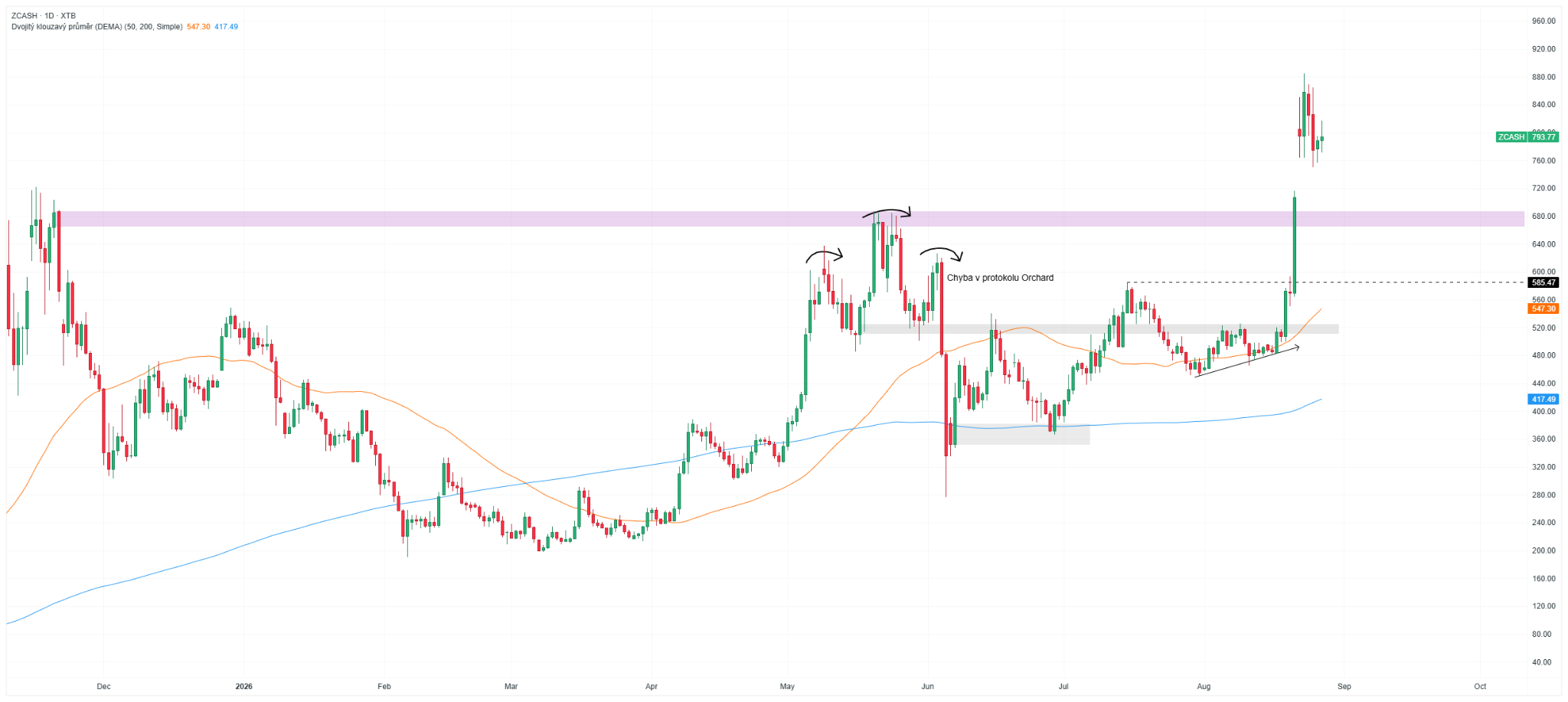
Source: XTB xStation
What to focus on in the coming weeks?
Bitcoin has received support from several directions. It has been helped by events in the bond markets, renewed investor interest in Bitcoin ETFs, and expectations of a more accommodating regulatory approach in the US. Only the coming weeks will tell whether this movement is the beginning of another growth phase or rather a short-term rally.
If you want to better understand how the cryptocurrency market works and the influences that drive the prices of Bitcoin, Ethereum, and other major cryptocurrencies, download the free XTB e-book "Crypto Market for Beginners"It offers an overview of interesting cryptocurrency projects, their possible uses and risks that every investor should take into account.

CFDs are complex instruments and, due to the use of leverage, come with a high risk of rapid financial loss. 77% of retail investors have experienced a loss. You should consider whether you understand how CFDs work and whether you can afford the high risk of losing your funds. Investing is risky, invest responsibly.