Sponsored by: Netflix is undoubtedly one of the companies that has significantly changed the world of entertainment. From the original service focused on renting DVDs, it gradually became the global leader in streaming movies and series and rewrote the rules of the entire industry. Its emergence significantly affected not only cinemas, but also traditional television broadcasting. While in the Czech Republic and Slovakia, cable TV packages are still relatively cheap and usually cost 10 to 20 euros per month, in the United States their price is usually around 100 dollars. This is precisely what is leading many households to cancel cable TV and switch to streaming platforms. Netflix thus remains a symbol of successful business transformation and an interesting title for investors.
The stock sell-off has multiple causes
At first glance, it doesn't seem like Netflix is struggling with a single major problem. The recent decline in its share price is more likely the result of several factors coming together. Although the company has posted solid financial results, its revenue growth rate has been gradually weakening and is expected to continue in the coming period. Investors have also been concerned about the company's decision to stop regularly reporting new subscriber numbers, which may indicate that its growth is no longer as dynamic as in the past.
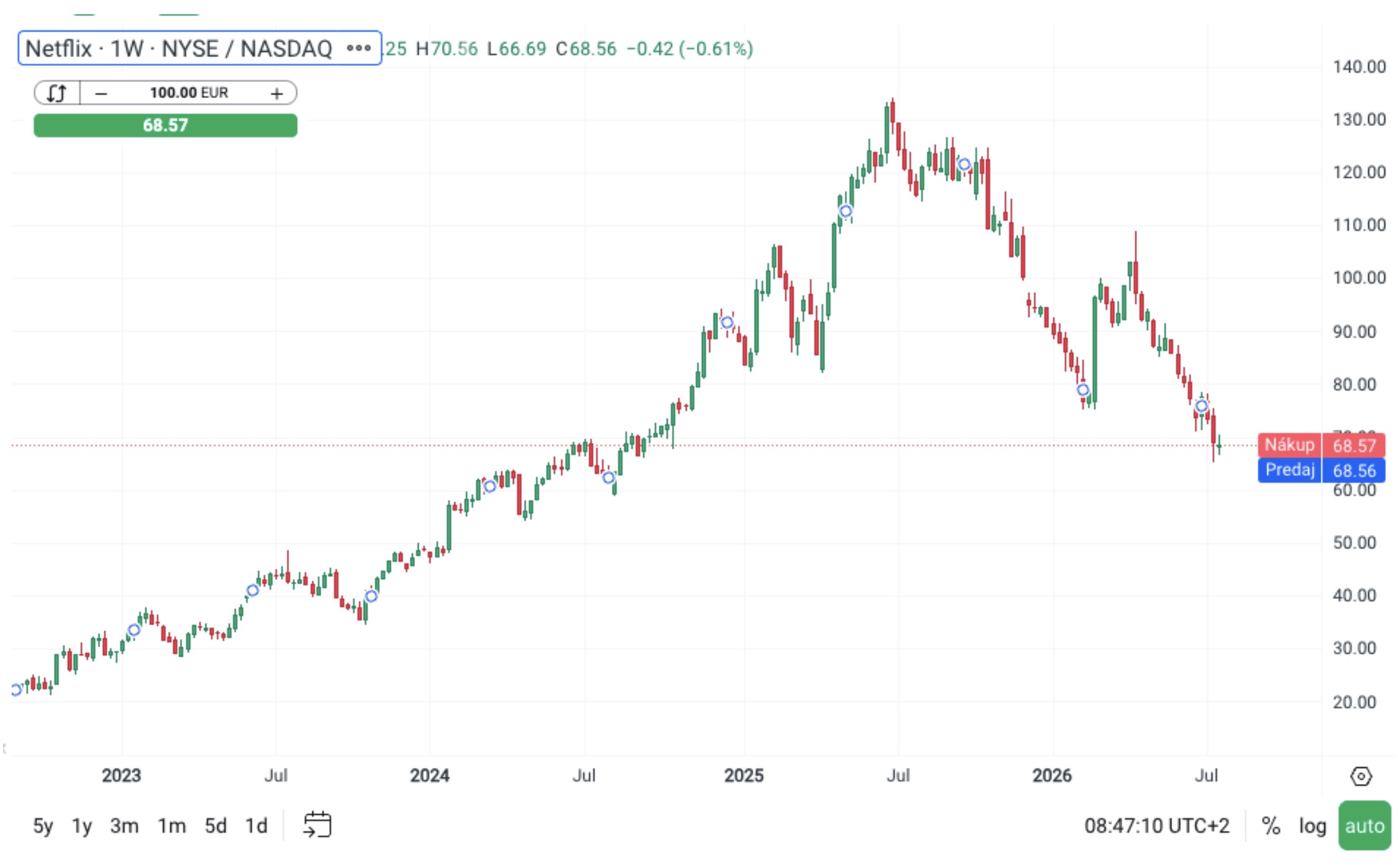
Source: XTB
Artificial intelligence is also starting to play a significant role. While it can help Netflix reduce costs and speed up content creation, it also brings new entertainment options to competing platforms. This means that users can divide their time between more services than before.
Stock valuations are no longer so tight
A significant part of the current revenue growth is provided by increasing subscription prices. However, this model cannot be used indefinitely, because customers have their limits. Moreover, Netflix has often been criticized in the past for its very high stock valuation, which was trading at more than fifty times annual earnings. In such a situation, even a slight slowdown in growth can provoke a more pronounced market reaction.
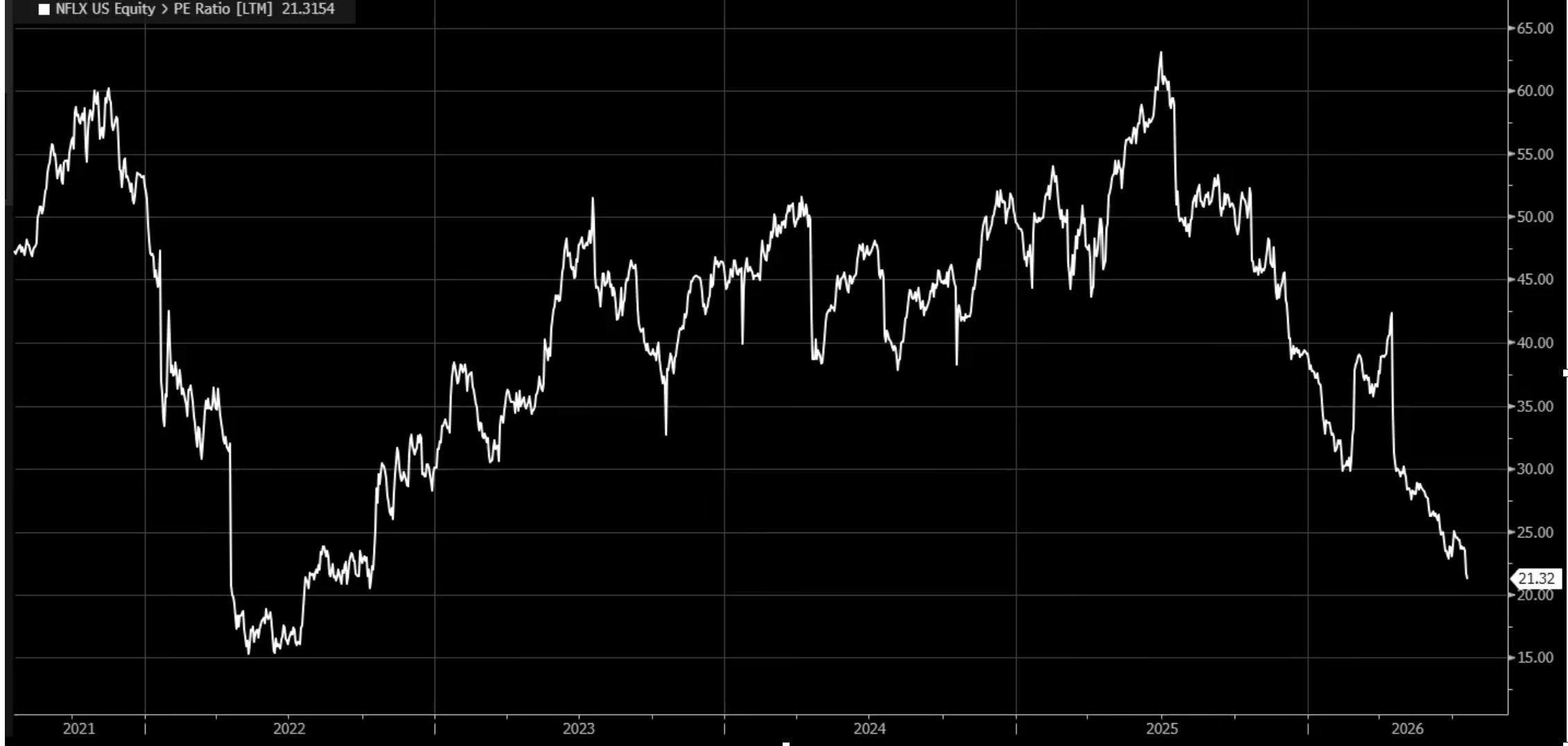
Source: Bloomberg Terminal
But that has changed in recent months. The P/E ratio is now around 21, the second lowest in the company's history. It has only fallen below that level in the past year. 2022, when virtually all stock markets were under strong pressure. For long-term investors, the current valuation may be more interesting, although it is necessary to take into account that market fluctuations are likely to continue.
If you are interested in a more detailed analysis of the current situation around Netflix, we recommend watching XTB video, in which analysts explain in detail the fundamental and technical reasons for the current stock development.
Investing is risky. Invest responsibly.