Sponsored by: The oil market has experienced further significant price fluctuations in recent days. North Sea Brent, after a previous decline to the $70 mark, quickly climbed to $87. Although it subsequently gave up some of its profits, it is still trading around $85 per barrel. The main reason is the renewed tension in the Middle East after the renewed conflict between the United States and Iran. Investors have started to factor in the higher risk associated with the Strait of Hormuz, through which a significant part of the world's oil and natural gas exports pass. Any complication in this area can therefore very quickly affect global energy prices.
Recent events have further heightened market concerns. The US Navy seized an Iranian vessel that attempted to breach the blockade, and shipping in the Strait of Hormuz was temporarily suspended again after a brief resumption. These incidents confirm that the situation remains very volatile. nestabil and possible further deterioration of the conflict may lead to a further increase in oil prices.
A certain counterbalance is the higher supply of raw materials on world markets. According to a July report by the International Energy Agency, global oil production increased by 4,1 million barrels per day in June after the partial resumption of operations in the Strait of Hormuz. Thanks to this, some of the risk premium is gradually disappearing from the market. However, any new military clashes could change this development very quickly.
CHART: BRENT oil price development (OIL, H1)
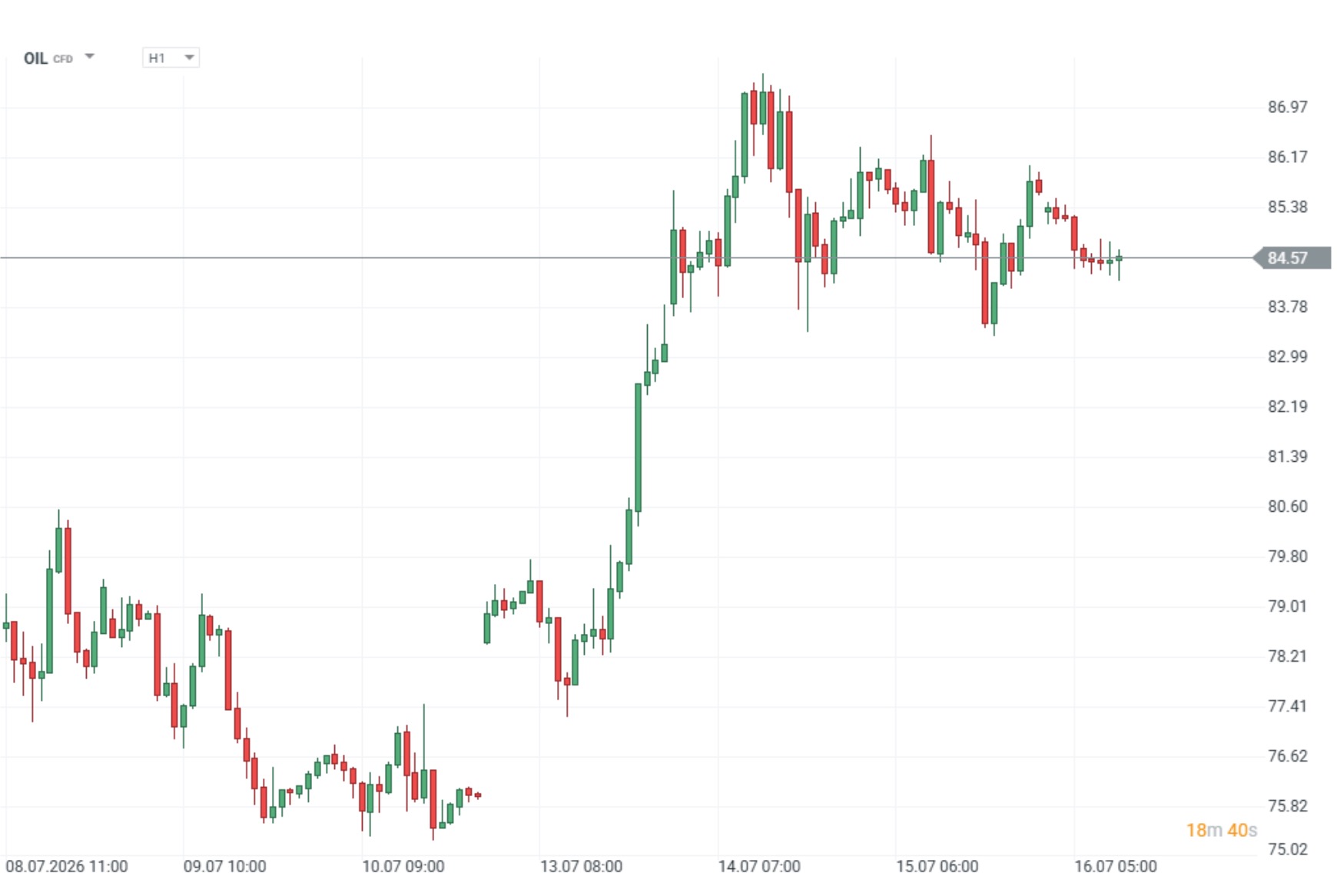
Source: xStation5
In addition, the ongoing war in Ukraine is also affecting market developments. While the attacks on Russian energy infrastructure have not yet had as significant an impact on global supplies as the events in the Persian Gulf, they are still keeping investors on their toes. The short-term direction of oil prices will therefore continue to be determined primarily by the geopolitical situation. If tensions in the Middle East persist, Brent could return to recent highs. maxIf the conflict calms down, on the contrary, there could be a gradual decline in prices, as the current geopolitical risk premium would disappear from the market.
Do you want to better navigate commodity markets and understand how to seize opportunities even during periods of increased volatility? Practical information is provided by e-book from XTB, which focuses on seven major commodities including oil, gold and coffee.
CFDs are complex instruments and, due to the use of leverage, come with a high risk of rapid financial loss. 74% of retail investors have experienced a loss. You should consider whether you understand how CFDs work and whether you can afford the high risk of losing your funds. Investing is risky, invest responsibly.